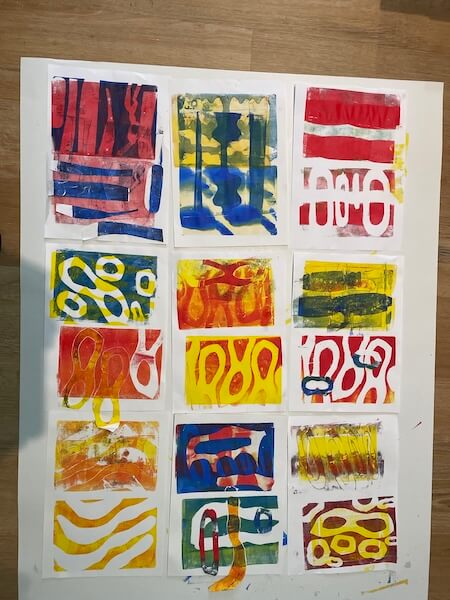
Exploring Gelli Printing with Children: Colour, Texture, and Play
Over the past few weeks, I’ve been diving into the world of Gelli printing with children – and it’s been such a joyful, messy, and creative adventure.
Gelli printing is a monoprinting technique using a soft, reusable plate. It’s incredibly accessible and perfect for children – there’s something magical about pulling back the paper to reveal layers of colour and texture that weren’t quite predictable. That sense of surprise is half the fun!
To start, I spent some time testing out different ways to use Gelli prints with collage paper and bright, bold acrylics. I experimented with layering, texture tools, natural materials (like leaves and grasses), and colour mixing – all with an eye on how this process could become part of playful, open-ended art sessions with children.
Some things I’ve discovered along the way:
- Collage papers work beautifully for layering textures and shapes. I cut and tore the prints after they’d dried and used them in abstract compositions – the children especially loved building landscapes and garden scenes.
- Using natural items (like ferns, feathers, or seed heads) to mask areas on the plate created some really delicate, interesting patterns.
- Colour mixing directly on the Gelli plate led to some fantastic results – vivid swirls and blends that looked like marbled paper or psychedelic skies.
- Most importantly, it’s a very process-led technique. There’s no pressure for the final print to be ‘perfect’ – each one is unique, which opens up space for experimentation and play.
I’m looking forward to developing this further – perhaps combining it with storytelling, nature walks, or seasonal themes. The possibilities are endless, and the children’s enthusiasm is infectious. There’s something so grounding and exciting about introducing these tactile, hands-on techniques – it encourages risk-taking, observation, and a real sense of pride in their creations.


